Food Truck Hood Cleaning in Huntsville, AL
Food truck hood cleaning in Huntsville covers the hood, baffle filters, plenum, the short duct and the roof-mounted fan, cleaned to NFPA 96 at your commissary or home lot, with a dated sticker for the fire inspection. A truck frying every service day is usually on a three-month schedule.
What Food Truck Hood Cleaning Covers
A truck's exhaust system is a full Type I system squeezed into a few feet, so the cleaning covers the same parts as a restaurant's: the filter bank, the plenum behind it, the duct and the fan, plus the grease cup and the roof around the fan. What differs is scale and setting. The duct is often under three feet long, the fan sits on the truck roof within arm's reach of a ladder, and the work happens in a parking lot instead of a building.
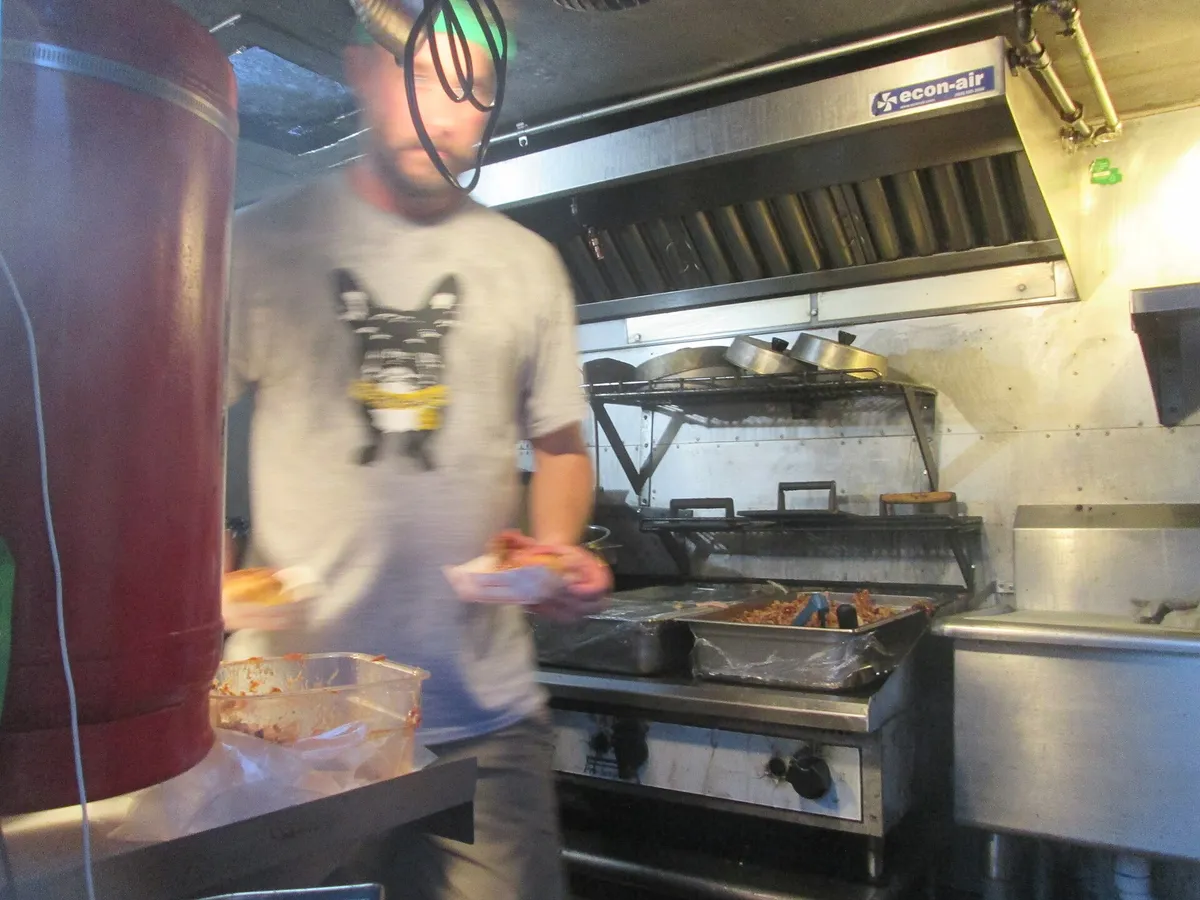
- Filters: pulled, soaked in a hot caustic bath and checked for bent baffles; damaged ones flagged for replacement.
- Plenum and hood interior: scraped and degreased to bare metal, including the grease gutter and cup.
- Duct: short on a truck, but it bends at the roof and that elbow collects grease first.
- Roof fan: wheel, housing and discharge cleaned; the fan is the part road vibration and weather age fastest.
- Roof surface: grease that weeps from the fan cleaned off the truck roof before it runs down the body.
- Sticker and report: dated sticker on the hood and a short written record of what was cleaned and what was found.
How Often a Huntsville Food Truck Hood Needs Cleaning
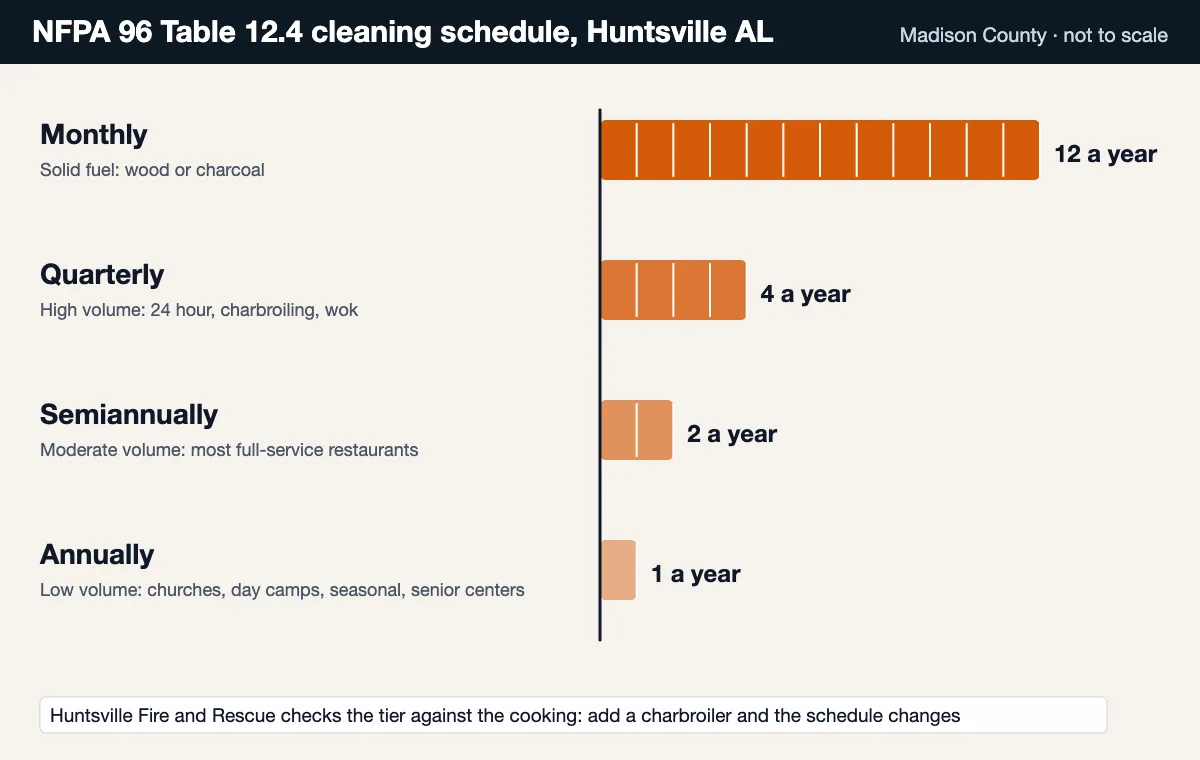
A food truck hood needs cleaning on the NFPA 96 Table 12.4 schedule for its menu, exactly like a restaurant: monthly for wood or charcoal, quarterly for high-volume frying, charbroiling or wok work, every six months for moderate volume and once a year for light use. The truck being small does not move it to a lighter row. A truck running a fryer every service day builds grease faster per foot of duct than many dining rooms do, because the hood is short and the cooking is concentrated.
Season matters more for trucks than for restaurants. Huntsville's Downtown Food Truck Rallies run the third Friday of each month from May, 5 to 9 PM at Big Spring Park, and a truck that works rallies, brewery lots and lunch stops through the warm months can do most of its year's cooking between May and October. Booking a cleaning in late April and another in late summer lines the schedule up with the heavy months instead of the calendar.
The schedule is a minimum. NFPA 96 also says a system found contaminated at inspection gets cleaned, whatever the date. A truck that picked up a smoker trailer or added wings mid-season should be checked sooner.
Food Truck Permits and Inspections in Huntsville and Madison County
A Huntsville food truck answers to two inspections: the Madison County Health Department, which issues the Mobile Food Unit permit (with a signed commissary agreement and yearly renewal), and a fire inspection, which looks at the hood, suppression system, propane and extinguishers. The hood cleaning sticker belongs to the fire side.
That picture changes on January 1, 2027. Under Alabama Act 2026-398, a food truck will need one health inspection from the county where its commissary is located and one fire inspection from an authorized fire department, and both will be recognized statewide. A truck that works Huntsville, Madison and Athens events will carry one fire inspection everywhere, which makes that one inspection matter more: the cleaning sticker and suppression tag on the day of it are what every later event relies on. Cities keep their business licences, zoning and parking rules.
| Hood and filters | Listed baffle filters, seated with no gaps, grease cup emptied. Mesh filters fail. |
|---|---|
| Cleaning sticker | Dated sticker on the hood showing who cleaned it and when the next service is due. |
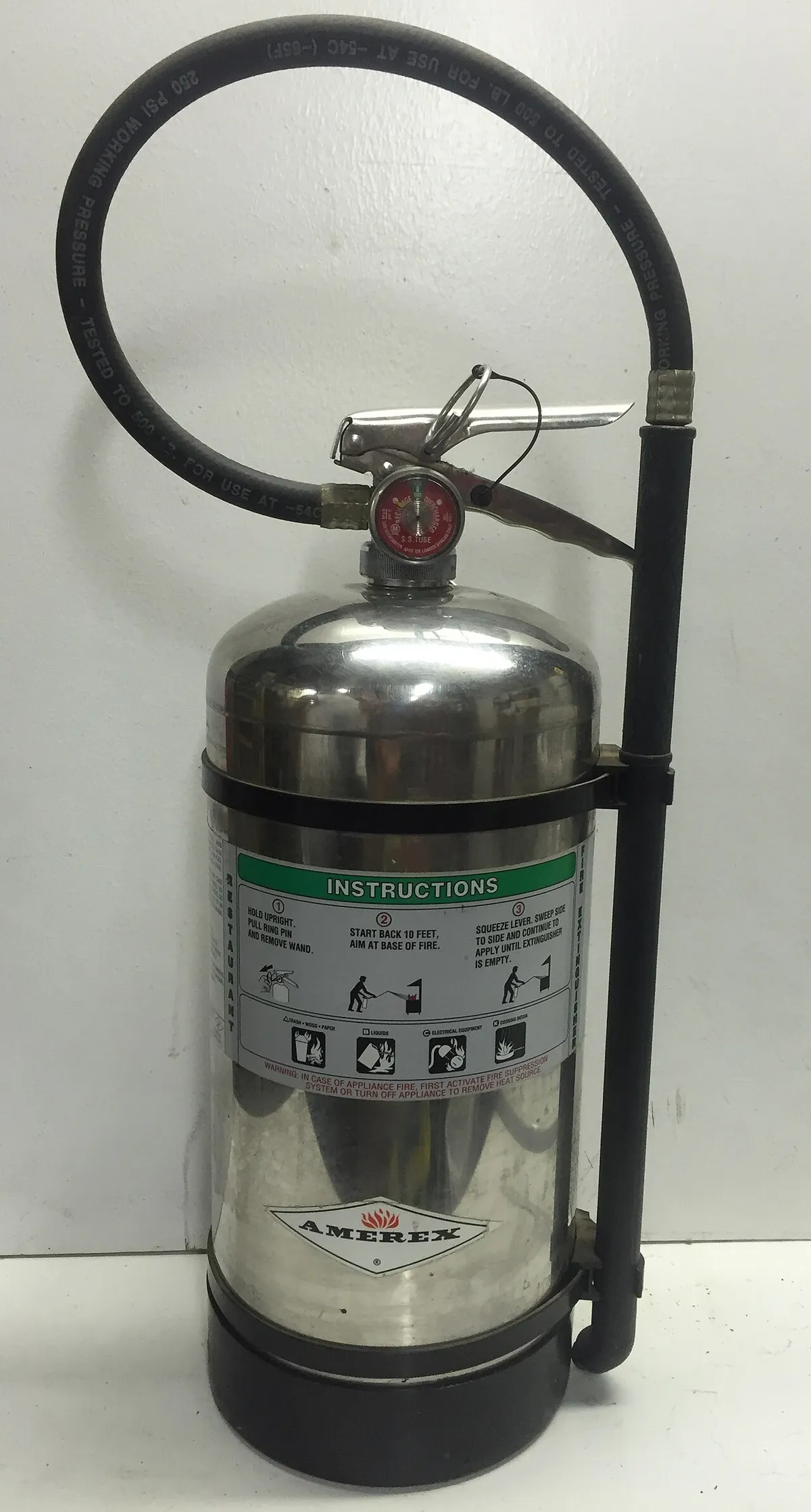
| Suppression tag | UL 300 system tag inside six months; nozzles aimed at the appliances actually on the line. |
| Propane | UL 1484 listed propane detector where there is propane and an electrical system, tested monthly; system checked before each use. |
| Clearance | 10 ft from building exits, combustible material, other vehicles and other cooking operations, or what the inspector sets. |
| Parking | Truck stabilized with wheel chocks or jacks while cooking. |
Food Truck Hood Problems a Cleaner Finds
The most common food truck finding is a fan that was never opened. Roof fans on trucks are small and often bolted straight to the duct collar with no hinge, so a quick clean wipes the hood and leaves the fan wheel loaded. A loaded wheel pulls less air, smoke rolls back toward the window, and the grease that is not caught at the hood ends up on the window frame and the roof.
The second is filters that fit a different truck. Trucks get resold and re-equipped, and a hood that came with one fryer often carries a filter set sized for an earlier layout. Gaps at the end of the track let grease straight into the plenum. The third is a grease cup that overflows on the drive home, which shows up as a brown streak down the side of the truck.
Road travel adds its own wear. Vibration loosens fan bolts and belt tension, and rain gets into a fan housing that sits uncovered on a roof. A cleaner who has the fan open is the first person to see a cracked weld at the duct collar or a belt glazed from slipping. For anything mechanical, see restaurant exhaust fan repair; for the sticker and what it has to say, see hood cleaning certificates and reports.
Getting a Truck Ready for Its Hood Cleaning
Park the truck where wash water can be caught, at the commissary or your own lot, with the generator off, propane closed and the cooking equipment cool. Clear the line of food and small wares. The cleaner covers the appliances and catches the runoff; caustic water does not go down a storm drain, which is one more reason the work is not done on the street.
Have the last cleaning sticker, the suppression tag and the equipment list handy. If the truck changed its menu or added an appliance since the last service, say so when you call: it can move the truck into a different row of Table 12.4.
Food Truck Hood Cleaning in Huntsville: Questions
How much does food truck hood cleaning cost in Huntsville?
A food truck's single short hood usually lands at the low end of the national per-visit ranges: the National Hood Cleaners Association put a single small hood at $300 to $700 a visit in 2026, and a truck frying every day with heavy buildup can price above that. A truck sits at the low end of that range when the hood is short, the duct is a few feet long and the system is cleaned on schedule. Replacement filters, a new fan belt or a hinge kit are quoted on top.
How often does a food truck hood need to be cleaned?
A food truck follows the same NFPA 96 Table 12.4 schedule as a restaurant: monthly if it cooks over wood or charcoal, quarterly for high-volume frying, charbroiling or wok cooking, semiannually for moderate volume and annually for light use. Table 12.4 names charbroiling, wok cooking and 24-hour cooking as high volume; a truck frying most of its menu five days a week is commonly scheduled quarterly too, and the fire inspector has the final say.
Does my food truck need a hood at all?
Yes, if it fries, grills, broils or cooks with grease. Those appliances need a Type I hood with a UL 300 wet chemical suppression system over them. A truck that only steams, warms or serves cold food may get by without a grease hood, and the fire inspector makes that call from the equipment list.
How long does a food truck hood cleaning take?
Less time than a restaurant hood, because the duct run is short and the fan sits a few feet above the hood. The time goes into protecting the line, soaking the filters and degreasing the plenum and fan, not into the duct. Heavy buildup from a missed cycle adds time.
Where does the cleaning happen, at the commissary or at an event?
At the truck's home base, almost always the commissary lot or the owner's own parking spot, with the generator and propane off. Hood cleaning makes caustic wash water that has to be caught and disposed of properly, which is why it is never done at a rally or on a public street.
What changes for Alabama food trucks in 2027?
Alabama Act 2026-398 takes effect for enforcement on January 1, 2027. A food truck then needs one health inspection from the county where its commissary is located and one fire inspection from an authorized fire department, and both are recognized statewide. Cities can still require business licences and set zoning and parking rules.
Is the suppression system service part of hood cleaning?
No. The UL 300 suppression system on a truck is inspected every six months by a licensed fire protection company, and that tag is separate from the hood cleaning sticker. Book the two close together so the suppression technician sees clean nozzles and the cleaner sees a current tag.