Hood Filter Service in Huntsville, AL
Baffle filter cleaning and replacement for commercial kitchen hoods in Huntsville and Madison County. Clogged or damaged filters reduce airflow and increase grease accumulation in the duct system. Included in every complete hood cleaning service.
Why Baffle Filters Matter
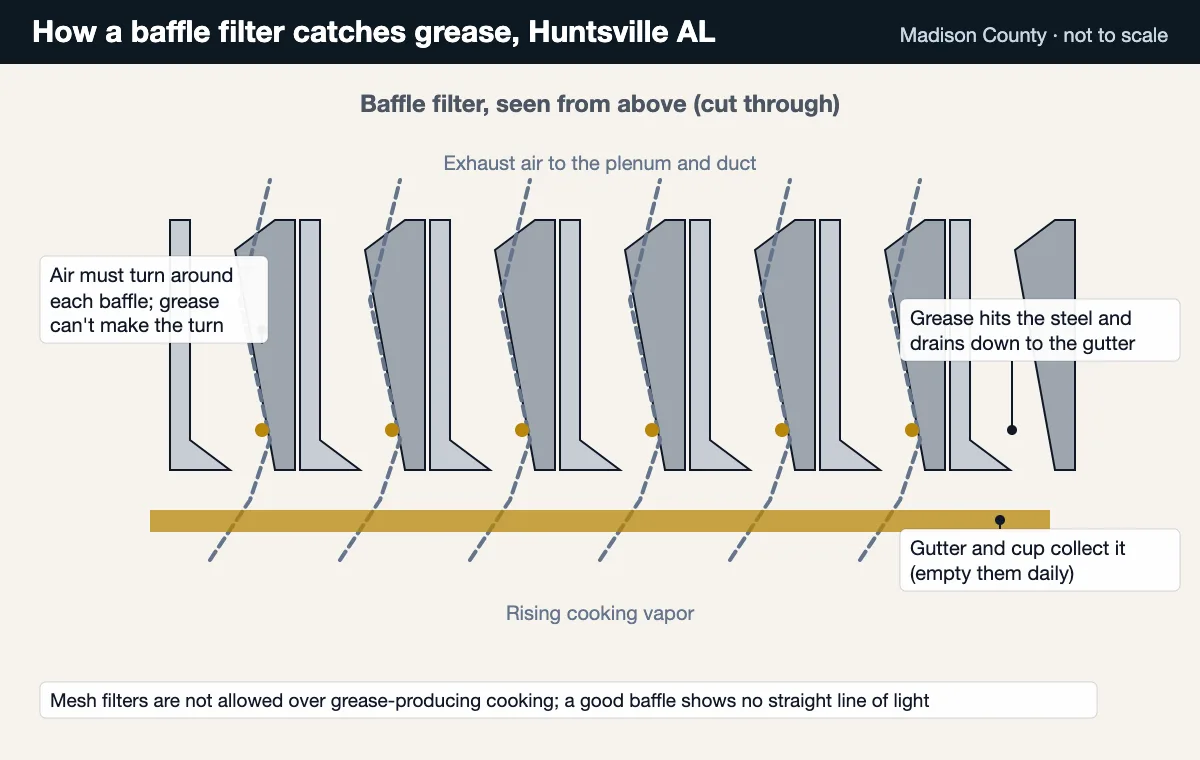
Baffle filters are the first line of defense in your kitchen exhaust system. They capture grease-laden air from the cooking equipment and use directional changes to cause grease droplets to collect and drain into the grease trough below. A properly functioning filter prevents grease from entering the duct system, where it poses a much greater fire risk and is significantly harder to remove.
Filter Cleaning
Filters are removed from the hood, degreased in a hot-water caustic solution, rinsed, and inspected. Cleaning removes accumulated grease and restores filter efficiency. Included at every scheduled service.
Filter Inspection
Each filter is checked for bent, missing, or corroded baffles. Damaged filters that cannot be restored to proper function are flagged for replacement before they are reinstalled.
Filter Replacement
Stainless steel baffle filters supplied and installed when cleaning is not sufficient or damage requires replacement. Replacement filters are sized to match your existing hood opening.
Grease Trough Service
The grease collection trough and drip cups below the filters are emptied, cleaned, and reinstalled at each service. Overflowing troughs are a common fire code violation.
NFPA 96 Chapter 6: What the Code Requires of Grease Removal Devices
Filters are not a housekeeping item under the code. NFPA 96 devotes Chapter 6 to grease removal devices in hoods, and Huntsville Fire and Rescue inspectors work from it directly when they look at your cook line. The requirements are specific enough that most filter findings are resolved on the spot once an operator knows what is being measured.
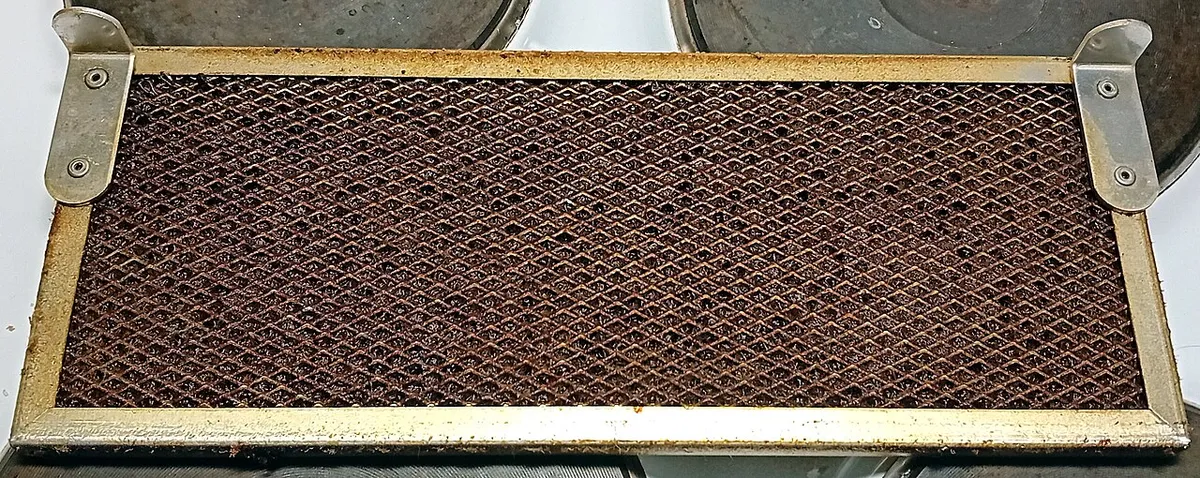
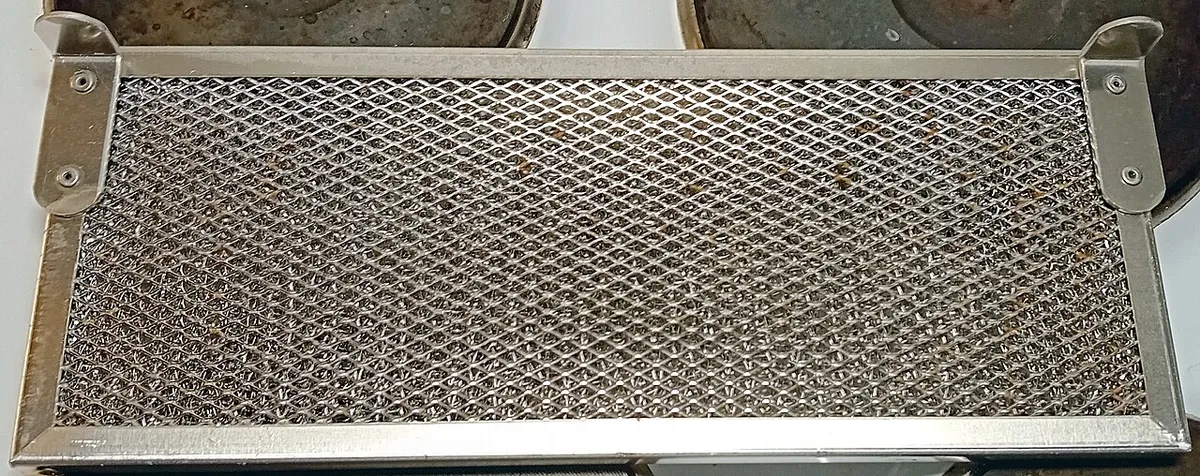
Filters must be listed for the application, which rules out mesh and honeycomb panels over grease-producing equipment. They must be tight fitting and firmly held in place, because any gap at the end of the filter track lets grease-laden air bypass the baffles entirely and travel straight into the plenum. On a 12 foot hood, a single missing filter can send a meaningful share of the total airflow around the filter bank.
Filters must be installed at an angle of not less than 45 degrees from horizontal so that captured grease drains down the baffle face into the trough instead of pooling on the filter. Seating angle should be checked at every visit. Filters lying closer to flat in a bent or corroded track are a routine finding in older Huntsville buildings where the hood has been unhung and rehung during a remodel, which is common in the Five Points and Downtown storefront stock.
Below the filters, a grease drip tray must be pitched to drain into an enclosed metal container, and NFPA 96 caps that container at 1 gallon capacity. Operators sometimes substitute a larger bucket to reduce how often it gets emptied. That is a violation, and it also defeats the point, because the 1 gallon limit exists to keep a large volume of liquid grease from sitting directly under an open flame.
NFPA 96 also sets minimum mounting heights between the cooking surface and the grease removal device: not less than 4 feet above solid fuel equipment such as a wood-fired oven or charcoal grill, and a reduced clearance above flame-producing equipment like charbroilers. If your hood was installed for a fryer line and the kitchen later added a charbroiler underneath it, the clearance may no longer comply even though nothing about the hood changed.
Filter Types Found in Huntsville Commercial Kitchens
Huntsville has a wide spread of kitchen vintages, from 1950s Downtown buildings to kitchens built out in the last five years at Town Madison and MidCity. The filter bank is usually the clearest signal of which era the hood came from and how it has been maintained since.
Stainless Steel Baffle
The commercial standard. Handles the hot caustic wash tank, resists corrosion, and lasts three to five years under a semiannual schedule. Slightly heavier than aluminum, which is why some operators are surprised by the weight when they pull a full set.
Galvanized Baffle
Cheaper at purchase and common in older leased spaces around Downtown and Five Points. The zinc coating breaks down in a caustic degreaser tank, after which the steel underneath rusts and the spot welds fail. Galvanized filters should be flagged for replacement rather than put through repeated hot washes.
Aluminum Baffle
Lightweight and inexpensive, but the baffles warp under sustained heat from a charbroiler or wok range. A warped baffle no longer forces the airflow direction change that makes the filter work. Aluminum should never go through a caustic dish machine cycle.
Mesh and Honeycomb Panels
Not permitted over grease-producing equipment under NFPA 96 Chapter 6. These are residential range hood parts. They load up with grease quickly, restrict airflow, and act as a wick if a flare-up reaches the hood face.
High-Velocity Cartridge Filters
Found in some newer builds around Town Madison and Bridge Street where the hood manufacturer supplied a proprietary extractor. They capture more grease per pass than a standard baffle but must be cleaned to the manufacturer schedule, and replacements are sourced from the hood maker rather than off the shelf.
Water-Wash Hood Extractors
Institutional kitchens across Madison County, including hospital, school, and Redstone Arsenal dining facilities, often run water-wash hoods with a detergent spray manifold on a timer. The wash cycle handles the extractor face only. The plenum, duct, and exhaust fan still require manual NFPA 96 cleaning on the normal Table 12.4 schedule.
Grease Filter Replacement Cadence and 2026 Huntsville Pricing
Cleaning is included at every scheduled service. Replacement is a separate, occasional expense, and it is worth budgeting for rather than being surprised by it during an inspection week. Stainless steel baffle filters on a semiannual schedule typically last three to five years. On a charbroiler-heavy line running quarterly service, expect 18 to 30 months before the leading edges deform and the baffles stop steering airflow the way they were designed to.
Stainless baffle filters list from about $28.49 each at HoodFilters.com, before labor, and rise with nominal size and a welded handle. The parts for re-kitting a 12 foot hood carrying six 20x20 filters therefore start around $170, with sizing and installation quoted on top. Because filters are quoted as an add-on rather than bundled into the base cleaning price, you pay only for the units that actually need to come out of service.
There is a simple field test for whether a filter is finished. Pull it out, hold it up toward the kitchen lights, and look through it end-on. A serviceable baffle filter shows no straight line of light through the assembly, because the baffles are supposed to overlap. If you can see daylight in a straight path, air can take that path too, and grease is riding along with it.
Replace a Filter When You See Any of These
Hood Filter Exchange Service in Huntsville
A hood filter exchange service swaps your dirty filter set for a clean one on a fixed cycle, usually weekly to monthly, and takes the dirty set away to be cleaned off-site. Your hood never sits without filters, and your staff never has to soak or run filters through the dish machine.
It fills the gap between hood cleanings. A semiannual or quarterly cleaning handles the filters along with the plenum, duct and fan, but filters load every service day. Kitchens that fry heavily, have no dish machine with a pot and pan cycle, or simply cannot spare the staff time at close are the usual fit. The exchange set has to match your hood exactly: the sizes and count recorded at the first visit (typically 16x20, 20x20 or 20x25 inch, 2 inch deep) are what the provider stocks for you.
An exchange program does not replace the scheduled NFPA 96 cleaning. Clean filters on a dirty plenum still leave the grease that matters most in place. Pair it with the full system service at your Table 12.4 interval, and for anything between the filters and the roof see kitchen hood inspection.
Hood Filter Service in Huntsville, AL: Frequently Asked Questions
How often should baffle filters be cleaned?
Baffle filters should be cleaned at every scheduled hood cleaning service visit. For high-volume kitchens (quarterly cleaning schedule), this means filters are cleaned four times per year. For low-volume operations (annual cleaning), they're cleaned once per year. Heavily soiled filters can be cleaned more frequently between scheduled services by kitchen staff using a commercial dishwasher or soaking in a degreaser solution.
When should baffle filters be replaced rather than cleaned?
Filters with bent, missing, or corroded baffles should be replaced. Bent baffles change airflow patterns inside the filter, reducing grease capture efficiency. Missing baffles leave gaps through which unfiltered air enters the duct. Filters should be inspected at each service and damaged units replaced.
What type of replacement filters should a commercial kitchen use?
Stainless steel baffle filters sized to match your existing hood configuration. Stainless filters are the commercial standard: they withstand high temperatures, clean easily, and last years with proper maintenance. Avoid aluminum or mesh-style filters, which degrade quickly in commercial kitchen environments.
Can dirty filters cause a duct fire?
Saturated baffle filters with heavy grease buildup reduce their ability to capture new grease, allowing more grease-laden air to enter the duct system. This accelerates grease accumulation in the duct interior and on the exhaust fan. Grease that reaches the duct is the primary fuel source for a duct fire.
Are mesh filters legal in a Huntsville commercial kitchen?
No. NFPA 96 Chapter 6 requires listed grease removal devices, and mesh filters are not permitted on hoods over grease-producing cooking equipment. Mesh panels are a residential range hood product. They still turn up in Huntsville spaces that were converted from retail or office use without a full kitchen plan review, most often in older Five Points and Andrew Jackson Way storefronts. A mesh filter found during a Huntsville Fire and Rescue inspection is a straightforward citation, and it is also the cheapest violation on the list to correct.
Can my kitchen staff clean baffle filters in the dish machine?
Stainless steel baffle filters can go through a commercial dish machine on the pot and pan cycle, and nightly washing is the single best thing a Huntsville kitchen can do between scheduled services. Aluminum filters should not go through a caustic machine because the detergent pits and dulls the metal, and galvanized filters will lose their coating. Dish machine washing does not replace the scheduled service. It handles the filter face, not the plenum behind it, the duct, or the fan.
What size baffle filters does my hood take?
Commercial baffle filters come in nominal sizes, most commonly 16x20, 20x20, and 20x25 inches, with 2 inch depth as the standard for grease applications. A 12 foot hood over a typical Huntsville cook line usually carries six 20x20 filters. The existing filter track should be measured at the first visit, with the sizes and count recorded on your service report so replacements can be ordered without a second site trip.
How much does it cost to replace a full set of hood filters in Huntsville?
Stainless steel baffle filters list from about $28.49 each at HoodFilters.com before labor, more for larger sizes and welded handles, so the parts for re-kitting a 12 foot hood with six 20x20 filters start around $170. Sizing, delivery and installation are quoted on top. Filters are quoted as an add-on to the base cleaning price rather than bundled, so you only pay for the units that actually fail inspection.