Hood Cleaning Certificates & Compliance Reports in Huntsville, AL
Every service includes a cleaning certificate affixed to the hood and a written service report with full grease level documentation. Ready for Huntsville Fire & Rescue, ADPH, and insurance carrier requirements.
What Is Included in Every Compliance Report
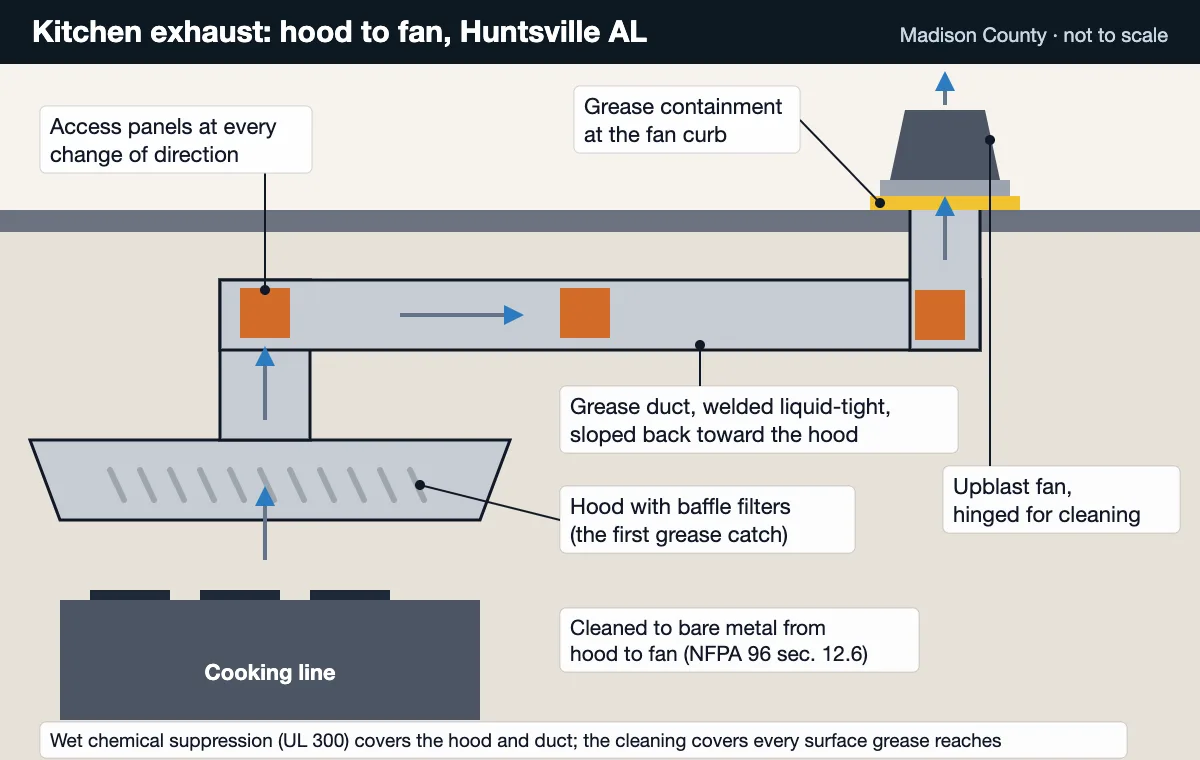
In Huntsville, the cleaning is only half of what you are buying. The other half is the paper that proves it happened, to the standard the code asks for, on the interval your kitchen is actually required to run. A spotless exhaust system with a vague sticker on the hood can still earn a finding, and an insurance carrier reviewing a grease fire loss will read the documentation long before anyone looks at the duct.
Cleaning Certificate (Hood Sticker)
A dated sticker applied directly to the hood showing date of service, technician name, certification number, and next service date. This is what inspectors check first.
Written Service Report
Full documentation: establishment name and address, all components cleaned, grease depth measurements before and after, access panels used, technician certification details, and copy provided to the operator.
Grease Level Documentation
Grease levels measured and recorded at key inspection points before and after service. Shows the inspector the system was cleaned from a measurable starting condition.
Next Service Date
The required next service date based on your NFPA 96 cleaning schedule is documented on both the certificate and the written report, so you know when service is due and can plan accordingly.
Who Reviews Hood Cleaning Documentation in Huntsville
The Two Inspection Tracks Every Huntsville Kitchen Runs On
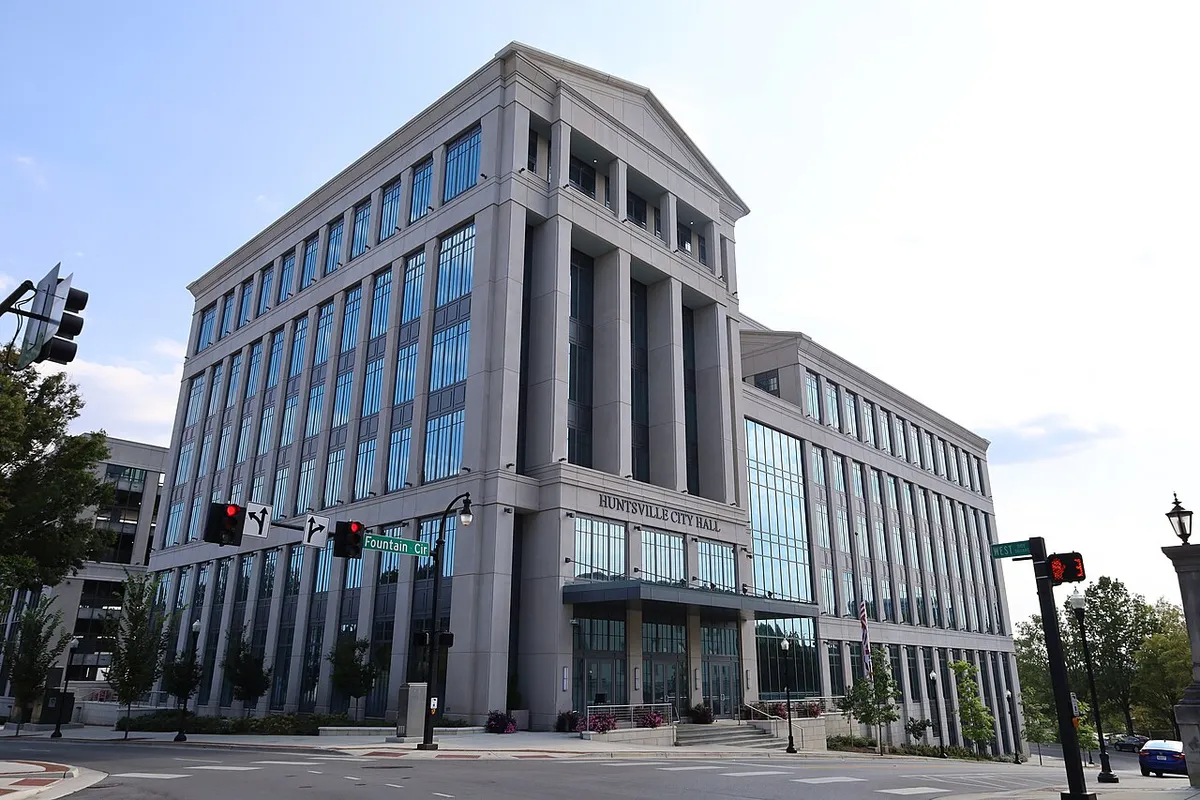
A commercial kitchen in Huntsville answers to two separate inspection regimes that look at the same exhaust system for different reasons and write findings on different forms. Operators who only prepare for one of them get surprised by the other, usually in the same week.
The fire track runs through Huntsville Fire and Rescue inside the city limits. Huntsville enforces the International Fire Code, whose Section 609 covers commercial kitchen hoods and sets inspection frequency for commercial cooking systems on the same tiering NFPA 96 uses. Section 609.3.3.2 of that code is the records clause: inspection and cleaning records must state who performed the work and when, be kept on the premises, and be produced to the fire code official on request. Alabama also reaches NFPA 96 through the State Fire Marshal's adoption of NFPA 101, whose Section 9.2.3 routes commercial cooking equipment to the same standard. Outside the city limits, in the Meridianville, Hazel Green, Toney, and Harvest pockets of Madison County, fire code oversight routes through the State Fire Marshal's office rather than a city marshal.
The health track runs through the Madison County Health Department, a county office of the Alabama Department of Public Health, under Chapter 420-3-22 of the Alabama Administrative Code. ADPH environmental health specialists are not evaluating fire risk. They are evaluating whether ventilation equipment is maintained and clean as part of a sanitation inspection, and in Alabama the resulting score is public. A hood filter bank with grease dripping onto a cook line is a sanitation finding regardless of what your fire certificate says.
There is a third audience that never announces itself: your insurance carrier. Commercial property policies covering grease fire loss generally condition coverage on documented cleaning at the required interval. That review happens after a loss, when nothing can be corrected, and it is the only one of the three where missing paperwork can cost six figures instead of a re-inspection fee.
NFPA 96 Section 12.6.4: What the Code Requires on the Label
Most operators assume the hood sticker is a courtesy from the cleaning company. It is not. NFPA 96 Section 12.6.4 requires that upon completion of cleaning, the vent cleaning contractor place or display a label within the kitchen area showing the date the system was inspected or cleaned and the name of the servicing company, and indicating any areas that were not cleaned.
That final requirement is the one that separates an honest record from a decorative one. If a horizontal duct run over a dropped ceiling could not be reached because the system has no access panels, the code expects that to be written on the label and in the report. A contractor who cleans what is easy, issues a clean certificate, and says nothing about the section they never opened has left you holding a document that misrepresents your own system. When the inspector eventually opens that run, the certificate becomes evidence against you rather than for you.
Section 12.6.2 sets the standard the cleaning itself has to meet: hoods, grease removal devices, fans, ducts, and appurtenances are to be cleaned to bare metal, and are to be maintained before surfaces become heavily contaminated. Bare metal is a checkable condition. An inspector who wipes a duct wall inside an access panel and comes back with a finger full of soft grease has the whole answer, whatever the sticker says. Section 12.6 also requires access panels and cover plates to be restored on completion and dampers and diffusers to be repositioned for proper airflow, which is why a proper report lists every panel that was opened.
One more clause is worth knowing because it turns up in Huntsville buildings with older systems. NFPA 96 prohibits the use of flammable solvents as cleaning aids. A crew that shows up with solvents rather than a hot caustic process is creating a hazard in the exact system you hired them to make safe, and nothing about the resulting certificate will protect you.
Every Field on Your Written Service Report
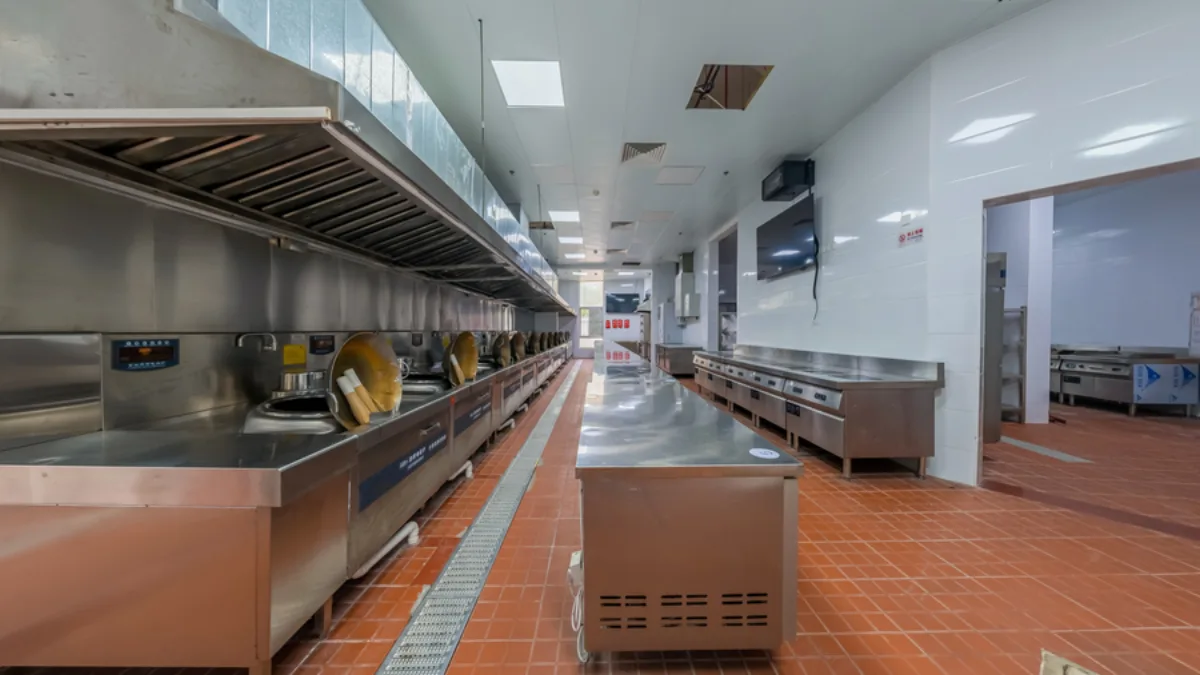
Below is the full field list a report should carry after each visit. A good report is built so that a Huntsville Fire and Rescue inspector, an ADPH environmental health specialist at the Madison County Health Department, and an insurance adjuster can each find what they need without calling anyone to interpret it.
Date of Service
The single field an inspector checks first, and the one that decides whether you are inside or outside your NFPA 96 Table 12.4 interval. Recorded on the hood label and on the written report.
Servicing Company Name
Required on the label by NFPA 96 Section 12.6.4 and required in the record by the International Fire Code that Huntsville enforces. An unnamed sticker is not a record.
Technician Name and Certification Number
NFPA 96 requires cleaning by properly trained, qualified, and certified persons. A good report carries the technician's CHDCA certification number so the qualification is provable rather than asserted.
Areas Not Cleaned
Section 12.6.4 specifically requires that inaccessible areas be indicated. If a duct run could not be reached because no access panel exists, it should be written down and the panel quoted rather than leaving a gap nobody knows about.
Grease Depth Before and After
Measured at defined points in the hood, duct, and fan. This converts a subjective claim into a number an inspector or an insurance adjuster can read.
Access Panels Used or Installed
Documents which panels were opened, which were added, and where they are, so the next technician and the next inspector both know where the system can be entered.
Next Service Due Date
Derived from your Table 12.4 category, not from a generic annual default. Printed on both the label and the report so the interval is impossible to lose track of.
Establishment Name and Address
Ties the record to the premises. Multi-location operators in Huntsville and Madison need this to keep reports from three kitchens from turning into one undifferentiated folder.
Record Retention, Storage, and Multi-Location Operators
The International Fire Code that Huntsville enforces sets a minimum three year retention for inspection and cleaning records, kept on the premises and produced to the fire code official on request. On the premises is the operative phrase. A report that lives only in a corporate email inbox in another state is not on the premises when an inspector is standing in your kitchen on a Tuesday morning, and a promise to send it later does not close the finding on the spot.
Good practice is a physical copy in a binder in the office, a digital copy sent to whoever handles compliance for the business, and the label on the hood. Three copies, three failure modes covered. Ask your cleaning contractor to keep an archive as well, so a report lost to a manager turnover or a back-office flood can be reissued with the original dates intact rather than reconstructed from memory.
Multi-location operators in the Huntsville market, including groups running kitchens across Downtown, Providence, Jones Valley, and Madison, should insist that every report carries the establishment name and street address on its face. It sounds obvious until three sets of reports from three kitchens end up in one folder and nobody can tell which quarterly interval belongs to which hood. Franchise agreements and commercial leases generally require certified hood cleaning documentation as a condition of the agreement, and the franchisor or landlord asking for it will want it per location, not per company.
What Happens When the Documentation Is Missing or Wrong
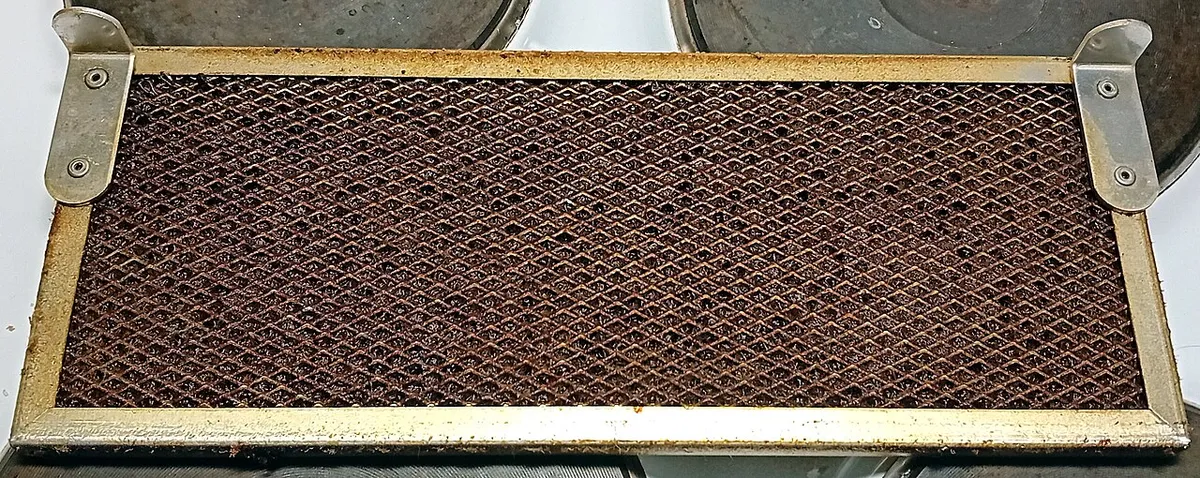
A missing certificate on its own is usually a correctable finding with a re-inspection. The expensive outcomes come from the cases where the paperwork existed but did not match reality. The three most common patterns in Huntsville kitchens are worth naming, because all three are avoidable with a report that tells the truth about the system.
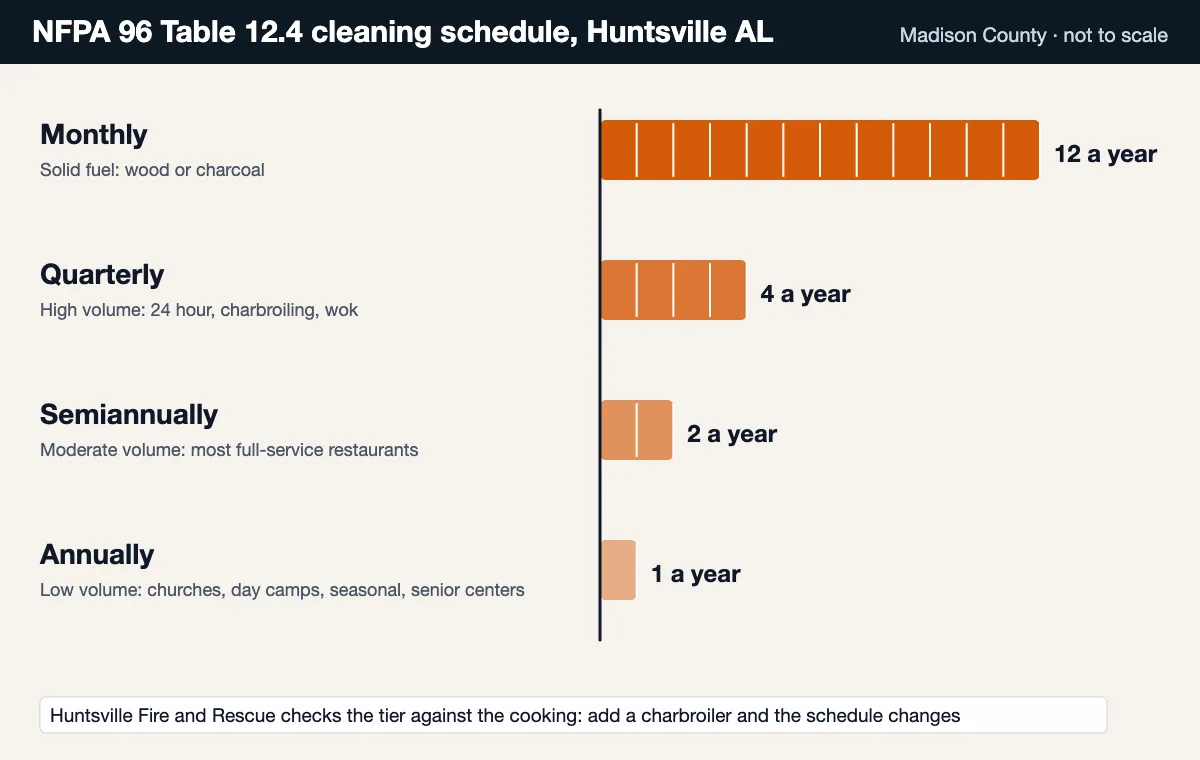
The first is a right certificate on the wrong interval. A kitchen that added a charbroiler two years ago moved from the semiannual tier of NFPA 96 Table 12.4 into a quarterly or monthly one, and nobody reset the schedule. The certificate is current, the interval is not, and the finding stands. The second is a clean sticker on a dirty system, which means the previous cleaning never reached bare metal and Section 12.6.2 was not satisfied. The third is the silent omission: duct sections never opened because the system has no access panels, and no note anywhere saying so.
On the health side, an ADPH finding for a poorly maintained ventilation system has to be corrected before it stops following you, and in Alabama the inspection outcome is public. On the insurance side, a grease fire loss on a system with a gap in the service history is the scenario carriers are specifically underwriting against. Fixing the documentation is far cheaper than any of these. If you are not sure what your current records actually say, bring them to the next service and have the technician walk through them with you.
Compliance Documentation in Huntsville, AL: Frequently Asked Questions
What does an NFPA 96 compliance certificate include?
A compliant hood cleaning certificate includes the date of service, technician name and certification number, the address and name of the establishment, all components cleaned, grease level documentation before and after service, access panels used, and the date the next service is due. The certificate is affixed directly to the hood where it is visible to inspectors.
What do Huntsville Fire & Rescue inspectors look for?
Inspectors typically check for a current cleaning certificate visible on the hood, the date of last service relative to the required cleaning frequency for your kitchen type, and the overall condition of the exhaust system. They may also request the written service report if the certificate is not immediately visible or if the system shows signs of heavy grease accumulation.
Do I need to keep cleaning records on file?
Yes. NFPA 96 and most insurance policies require that cleaning records be retained and available for inspection. Ask for a written service report at each cleaning and keep it on file. Combined with the certificate on the hood, this gives you a complete compliance record.
Can a hood cleaning compliance report be used for insurance purposes?
Yes. A complete written service report documents technician CHDCA certification, the full scope of work performed, and grease levels before and after service. This is the documentation that insurance carriers typically require when verifying that a grease fire loss occurred despite a properly maintained exhaust system.
What if I have not had my hood cleaned in over a year?
Request a quote. The system can be assessed, cleaned, and brought current on documentation. An overdue cleaning does not disqualify you from getting compliant going forward. It does mean the cleaning will likely take longer and cost more than a regularly maintained system, but it restores your compliance standing.
How long do I have to keep hood cleaning records in Huntsville?
The International Fire Code, which the City of Huntsville enforces, requires inspection and cleaning records to state who performed the work, what was done, and when, and to be kept on the premises for a minimum of three years and provided to the fire code official on request. Keeping them longer than that is wise. Insurance carriers reviewing a grease fire loss frequently ask for the full service history on the system, not just the last three years, and the operator who can produce five years of dated reports is in a materially better position than the one who cannot.
What does the code actually require to be written on the label?
NFPA 96 Section 12.6.4 requires that upon completion of cleaning, the contractor place or display a label within the kitchen area showing the date the system was inspected or cleaned and the name of the servicing company, and indicating any areas that were not cleaned. That last clause is the one most operators have never heard of, and it matters. If a duct section could not be reached because there is no access panel, the code expects that to be written down, not quietly omitted.
Does my kitchen in unincorporated Madison County get inspected differently?
Yes, and it catches people out. Inside the Huntsville city limits, Huntsville Fire and Rescue handles fire code inspection of your kitchen. Outside the city limits, in the county pockets around Meridianville, Hazel Green, Toney, and Harvest, there is no county fire code enforcement office of the same kind, and fire code oversight routes through the Alabama State Fire Marshal's office instead. The health side does not change: the Madison County Health Department, an office of the Alabama Department of Public Health, inspects food establishments county wide under Chapter 420-3-22.
My inspector wrote up my hood even though I have a current certificate. How?
Two common reasons. First, the certificate date is current but the interval is wrong: a charbroiler-heavy kitchen on an annual schedule has a current certificate and is still out of compliance with NFPA 96 Table 12.4, which puts that operation on quarterly or monthly. Second, the certificate is current but the system is visibly dirty, which means the previous cleaning did not reach bare metal as Section 12.6.2 requires. A sticker is evidence of a cleaning, not a substitute for one.
Does hood cleaning cover the semiannual fire suppression system service too?
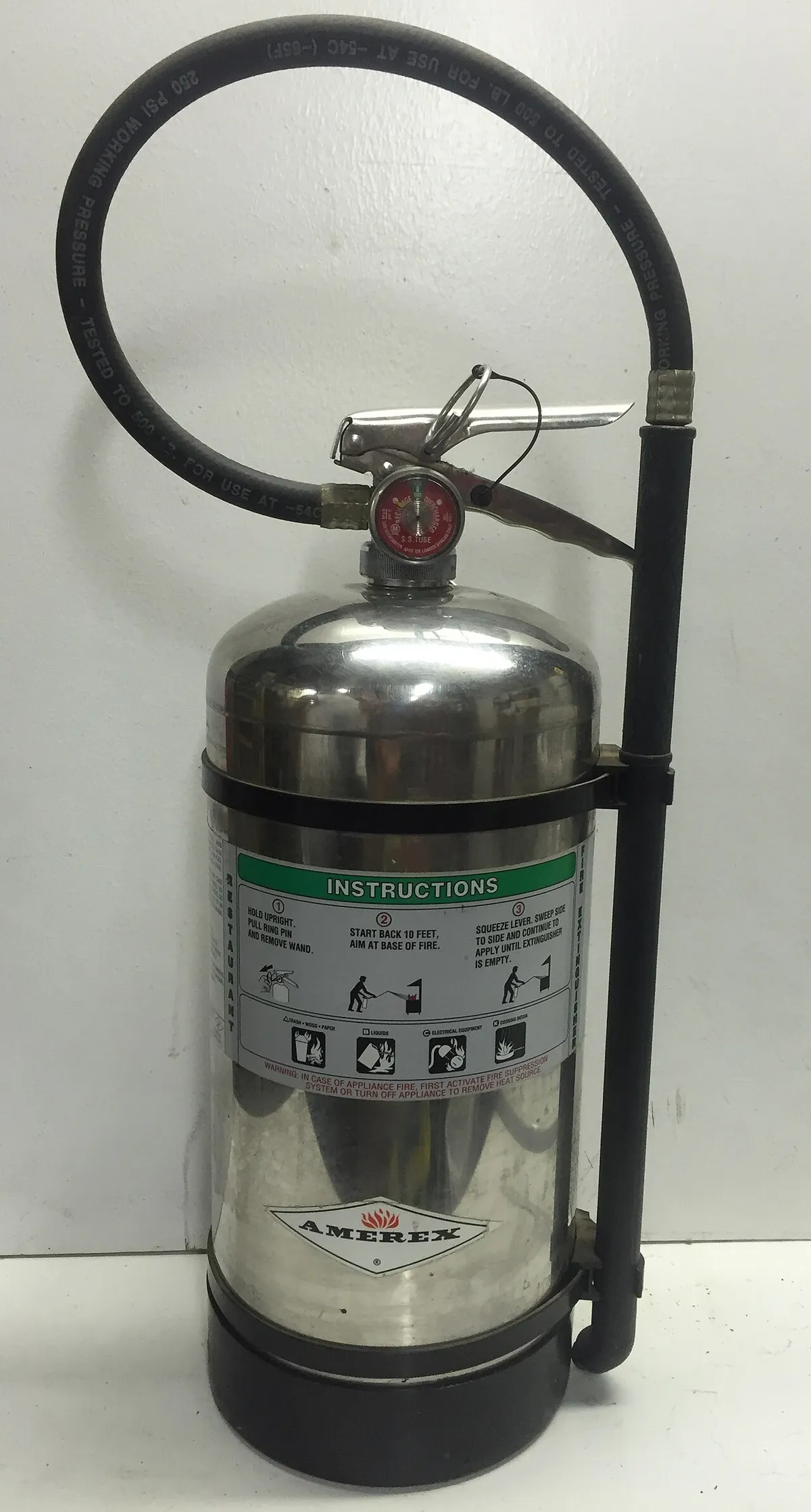
No. That is a separate discipline and a separate certification, but a good hood cleaner flags it. NFPA 96 requires the fire-extinguishing system protecting the hood to be inspected and serviced at least every six months, including fusible link replacement. If the suppression tag is out of date, it should go on your service report, because a fire inspector standing in your kitchen will look at both tags and the hood cleaning certificate will not save you from the other finding.