Kitchen Hood Inspection in Huntsville, AL
A kitchen hood inspection in Huntsville is the NFPA 96 grease check of your hood, filters, duct and exhaust fan, done on a schedule set by what you cook: monthly, quarterly, twice a year or once a year. It measures grease depth, finds damage, and decides whether a cleaning is due now or at the next date.
What a Kitchen Hood Inspection in Huntsville Checks
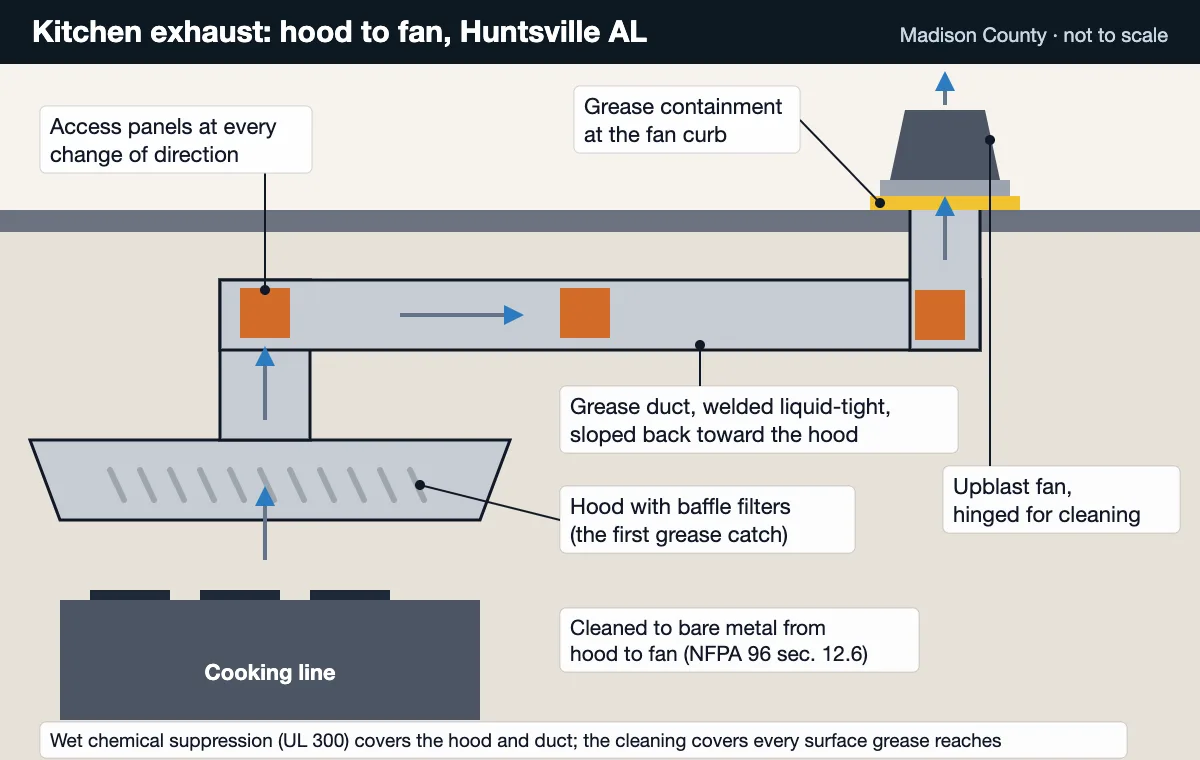
The inspection follows the grease path from the cook line to the roof and records what it finds at each stop. Most of it is measured or photographed, not judged by eye, so the result is something you can show a landlord, an insurer or a fire inspector.
- Filters: listed baffle filters, the right size, seated with no gaps, set at the angle that lets grease drain; mesh filters are a finding.
- Hood and plenum: grease depth behind the filter bank, grease gutter and cup, light fixtures and seams.
- Duct: depth readings at each reachable section, access panels present and sealed, welds and seams with no grease weeping.
- Exhaust fan: wheel and housing depth, a hinge so the fan can be opened, drain clear, belt and bearings sound.
- Roof: grease around the fan curb, containment present and not saturated.
- Cook line: appliances still in their design position under the hood and under the suppression nozzles.
Inspection Is the Schedule, Cleaning Is the Result
NFPA 96 Table 12.4 is an inspection schedule, not a cleaning schedule. The standard says the entire exhaust system is inspected for grease buildup by a properly trained, qualified and certified person acceptable to the authority having jurisdiction, at the frequency in the table, and that any part found contaminated is cleaned. Most kitchens buy the two together, which is why the table reads like a cleaning calendar.
The difference matters in two cases. A light-use kitchen inspected on schedule may not need every section cleaned every time, and the inspection record shows why. And a heavy kitchen can need cleaning between dates: section 12.6.1.1 sets depth limits that mean clean now, whenever they are reached.
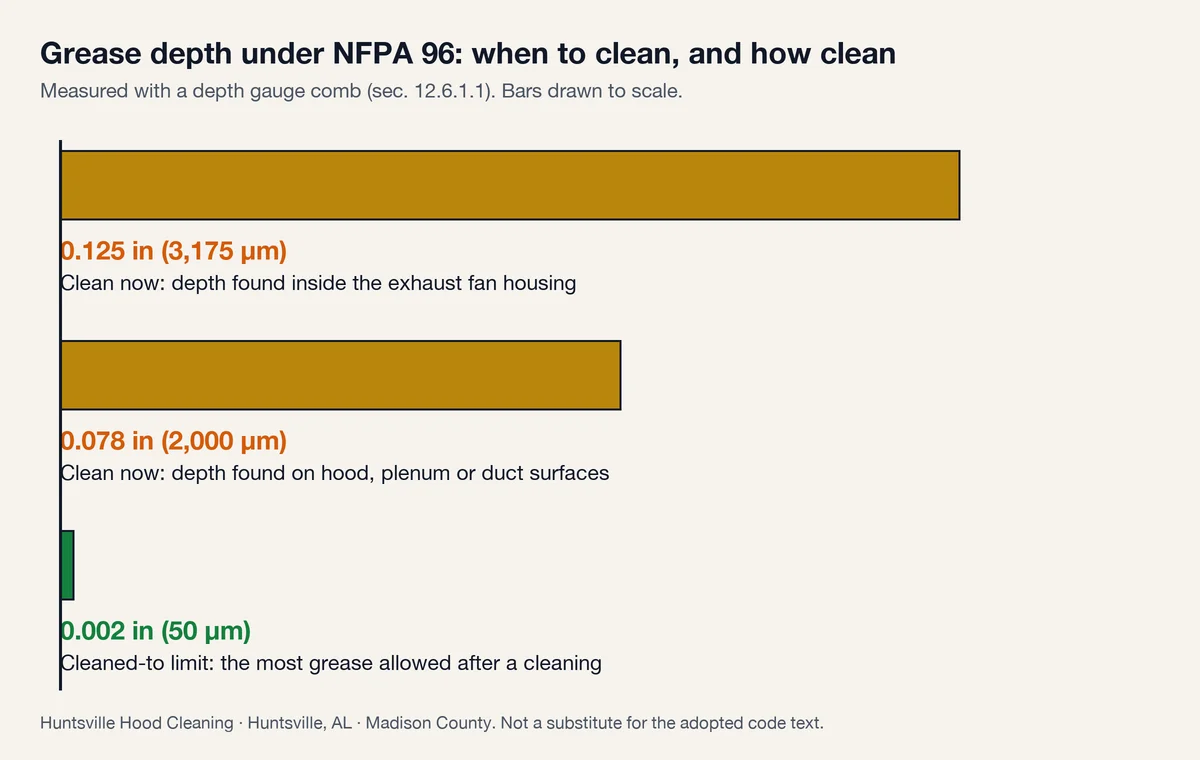
The gauge comb is a simple tool: a notched card pressed onto the surface, read at the deepest notch that picks up grease. Readings are taken at the same points each visit so the record shows a trend, and the trend is what tells you whether your schedule is right.
Who Can Inspect a Kitchen Exhaust System
NFPA 96 leaves the "qualified and certified" part to the authority having jurisdiction, and the industry fills it with credentials. IKECA, the International Kitchen Exhaust Cleaning Association, certifies cleaning technicians (CECT), cleaning specialists (CECS) and, for this job specifically, Certified Exhaust System Inspectors (CESI). Its ANSI/IKECA I10 standard sets a written method for inspecting commercial kitchen exhaust systems: what to look at, how to measure and how to report it.
When you book an inspection, ask for the inspector's credential and number, and ask for the report to list depth readings by location, photos, and anything that could not be reached. A one-line "system inspected" note protects nobody.
Four Inspections a Huntsville Kitchen Hears About
The word inspection covers four different visits, by four different people, against four different rules. Mixing them up is how kitchens end up with a current suppression tag and a duct nobody has looked inside.
| Inspection | Rule | How often | Who does it |
|---|---|---|---|
| Exhaust system grease inspection | NFPA 96 Table 12.4 | Monthly to annually by cooking type | Trained, certified exhaust inspector or cleaner |
| Suppression system inspection | UL 300 system, NFPA 17A | Every 6 months | Licensed fire protection contractor |
| Fire marshal occupancy inspection | Adopted fire code (Huntsville Fire & Rescue; Madison Fire & Rescue; Athens Fire & Rescue) | Routine or complaint driven | City fire inspector |
| Health inspection | ADPH Chapter 420-3-22 | Routine, by the county health department | County environmentalist |
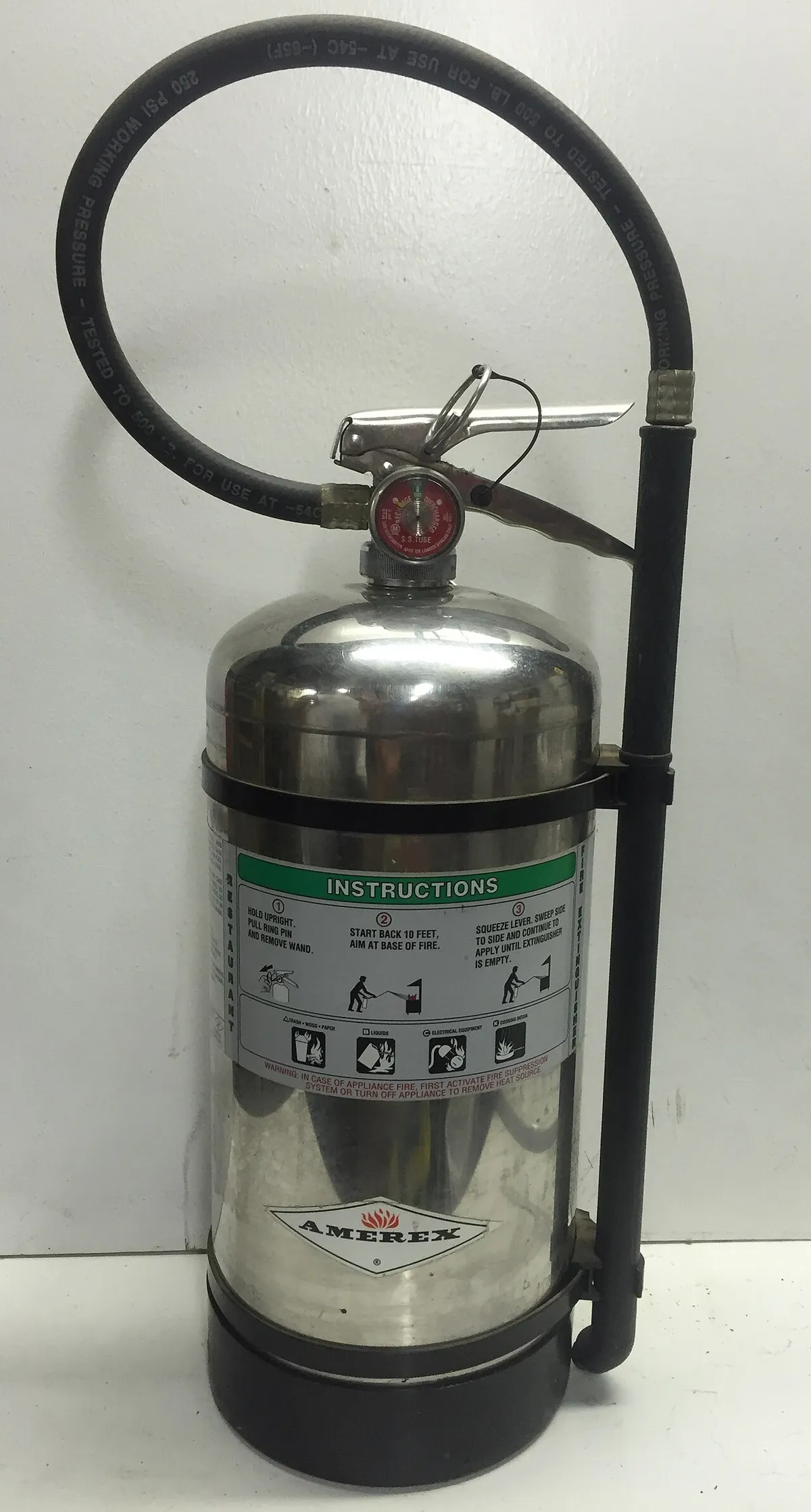
The fire marshal checks the results of the first two: a dated cleaning sticker and a current suppression tag on the hood. Our hood cleaning certificates and reports page covers what that paperwork has to show, and the permit guide covers which office has jurisdiction over your address.
Hospital and Nursing Home Kitchen Hood Inspections
Hospital, nursing home and other Medicare-certified kitchens get a fifth reviewer: the CMS life safety survey. Surveyors cite kitchen exhaust problems under K-tag K324, Cooking Facilities, and they cite against the 2011 edition of NFPA 96, the one the federal Life Safety Code references, even where the local fire code uses a newer edition.
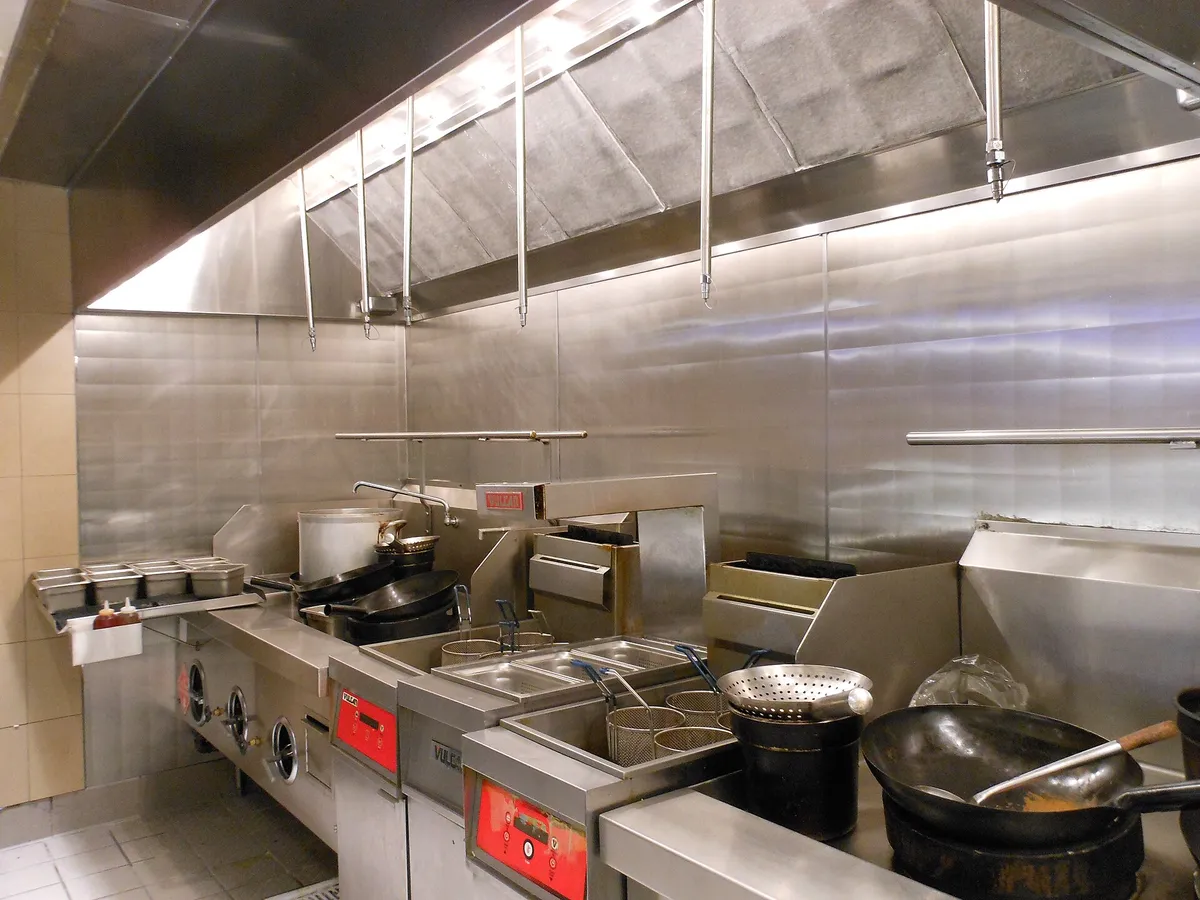
Public survey records show what that looks like in practice. One Alabama hospital surveyed in December 2024 was cited under the 2011 edition, sections 12.1.2.2 and 12.1.2.3, for having no approved way to make sure appliances on casters return to their design position under the hood after they are moved for cleaning. For a hospital kitchen running around the clock, the inspection report is evidence as much as maintenance.
Kitchen Hood Inspection: Questions
What does a kitchen hood inspection check?
A kitchen hood inspection checks the whole exhaust system for grease buildup and for damage: filters, hood and plenum, every reachable section of duct, the exhaust fan and the roof around it. Grease is measured with a depth gauge comb, and the inspector notes missing access panels, leaking seams, a fan that cannot be opened and appliances that have moved out from under the hood.
How often does a commercial kitchen hood need to be inspected?
NFPA 96 Table 12.4 sets the inspection schedule by cooking type: monthly for solid fuel such as wood or charcoal, quarterly for high-volume cooking such as 24-hour service, charbroiling or wok cooking, semiannually for moderate volume and annually for low volume such as churches, day camps and seasonal businesses.
Who is allowed to inspect a kitchen exhaust system?
NFPA 96 calls for a properly trained, qualified and certified person acceptable to the authority having jurisdiction. In practice that means a technician holding an industry credential such as IKECA's Certified Exhaust System Inspector (CESI) or a comparable hood and duct certification, working to a written method like the ANSI/IKECA I10 inspection standard.
Is a hood inspection the same as a fire marshal inspection?
No. The fire marshal's inspection looks at the whole occupancy and checks that your hood has a current cleaning sticker and suppression tag. The hood inspection on this page is the grease check of the exhaust system itself, done on the Table 12.4 schedule, and it is what decides whether a cleaning is due.
What happens if the inspection finds too much grease?
The contaminated parts get cleaned. Under NFPA 96 section 12.6.1.1, a depth gauge reading of 0.078 inch on hood, plenum or duct surfaces, or 0.125 inch in a fan housing, means clean now, whatever the calendar says. After cleaning, no more than 0.002 inch may be left.
Do I need a hood inspection before leasing or buying a restaurant space?
It is one of the most useful checks you can buy before signing. A second-generation kitchen comes with a hood, duct and fan someone else maintained, and an inspection shows whether the duct was ever cleaned past the first few feet, whether access panels exist and whether the fan and containment are sound, before those become your bill.