Hood Cleaning Permit Requirements in Huntsville, AL
How Alabama food service permitting intersects with NFPA 96 hood cleaning compliance in Huntsville and Madison County.
Alabama Food Service Establishment Permit

Restaurants and commercial food service operations in Alabama are required to hold a food service establishment permit issued by the Alabama Department of Public Health (ADPH). Permits are issued and renewed under Chapter 420-3-22 of the Alabama Administrative Code, which sets sanitation and facility requirements for food establishments. Hood cleaning requirements flow from NFPA 96, the referenced national standard for commercial cooking exhaust systems.
NFPA 96 is the referenced standard for commercial cooking exhaust system maintenance in Alabama. Proper documentation of hood cleaning services is required to demonstrate compliance with Chapter 420-3-22's ventilation system maintenance provisions.
In Huntsville and Madison County, ADPH inspectors evaluate kitchen ventilation as part of routine food service inspections. A hood system that visibly has heavy grease accumulation or lacks a current cleaning certificate can result in a food safety violation citation, which must be corrected before permit renewal.
Huntsville Fire Code and Hood Cleaning
Separate from the ADPH food service permit, Huntsville Fire and Rescue enforces NFPA 96 compliance through fire safety inspections of commercial kitchens. A fire code violation for overdue or missing hood cleaning is issued independently of the ADPH food service permit violation.
Both agencies look at the same physical system, and both can cite you for the same underlying failure to maintain the exhaust system. Maintaining current cleaning documentation satisfies both inspection tracks.
What Counts as Compliant Documentation
Permitting a New or Remodeled Kitchen in Huntsville
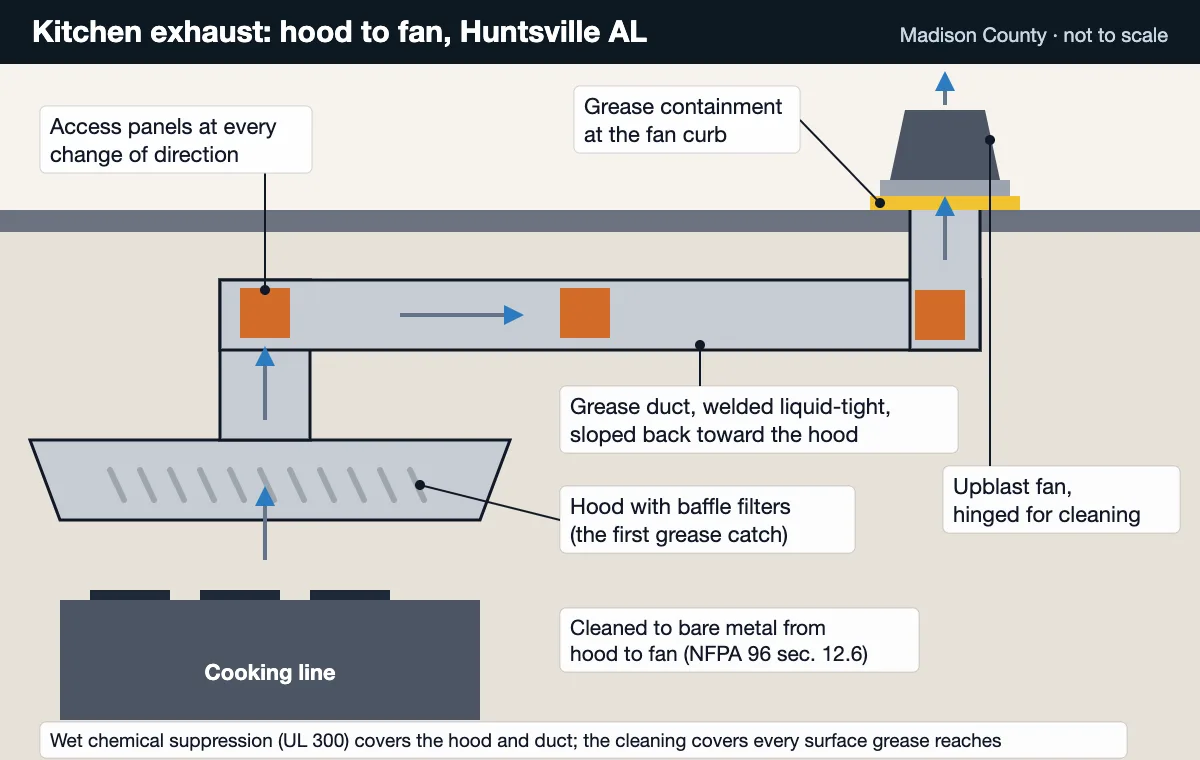
Hood cleaning needs no permit. Putting a hood in does. The two get conflated constantly, usually by an operator who has just signed a lease on a Downtown or Five Points space and assumed the previous tenant's kitchen carries over. It rarely does, because a change of use, a change of cooking equipment, or a build-out that touches the exhaust system all pull the kitchen back into plan review.
Below is the sequence a Huntsville restaurant build-out actually runs through. The order matters more than the paperwork. Steps taken out of sequence are what turn a six week schedule into a five month one, and the deadline that does the most damage is health department plan review, because it is the one that has to happen before construction rather than alongside it.
Once you are open, the permitting agencies hand you off to the maintenance clock. Your food service establishment permit stays valid on the condition that the kitchen, including its ventilation, keeps meeting Chapter 420-3-22. Your fire compliance depends on cleaning the exhaust system at the NFPA 96 Table 12.4 interval for what you actually cook, and documenting it. Neither obligation sends you a reminder.
Which Authority Has Jurisdiction Over Your Kitchen

Madison County is not one regulatory environment, and operators who move from one kitchen to another inside the same county frequently assume it is. Inside the Huntsville city limits, which covers Downtown, Five Points, Jones Valley, Providence, Research Park, and a large share of the county's restaurant stock, building and mechanical permits run through City of Huntsville Development Services and fire inspection runs through Huntsville Fire and Rescue.
The City of Madison operates its own building department and issues its own permits and Certificates of Occupancy, so a kitchen at Town Madison or along Hughes Road is permitted by Madison rather than Huntsville even though the two cities share a county and a metro. Redstone Arsenal is federal property with its own installation-level fire and safety oversight, which is why dining facility work there follows a different approval path entirely than a restaurant a mile outside the gate.
In the unincorporated parts of Madison County, including Meridianville, Hazel Green, Toney, and much of Harvest, there is no city building department with jurisdiction. Fire plan review and fire inspection generally route through the Alabama State Fire Marshal's office, which sits under the Alabama Department of Insurance and enforces NFPA 101, whose Section 9.2.3 sends commercial cooking equipment to NFPA 96. Operators out there sometimes conclude that nobody is watching. The standard applies identically. The office enforcing it is just further away.
The one constant across the whole county is the health side. The Madison County Health Department, an office of the Alabama Department of Public Health, handles food establishment plan review, permitting, and routine inspection under Chapter 420-3-22 whether your kitchen is in Downtown Huntsville, Madison, or a county pocket north of Meridianville.
How a Menu Change Quietly Changes Your Obligations
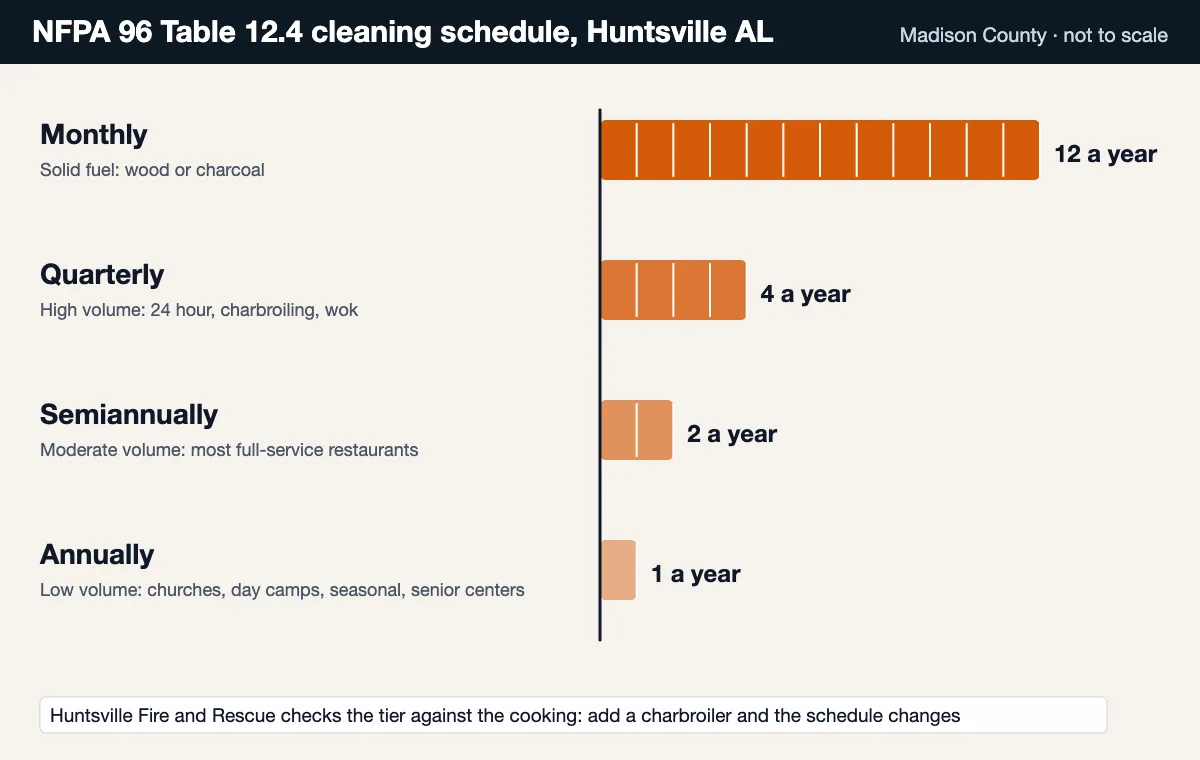
The most expensive compliance gaps in Huntsville kitchens do not come from operators ignoring the rules. They come from operators whose kitchen changed while their paperwork stayed the same. A concept that opened as a sandwich shop on a semiannual cleaning interval and has since added a fryer bank and a char grill is on the wrong interval under NFPA 96 Table 12.4, and the certificate on the hood says nothing about that.
Table 12.4 tiers by what and how much you cook, not by what your sign says. Solid fuel cooking, meaning wood or charcoal, is monthly. High-volume and 24 hour operations are quarterly. Most full-service restaurants sit at semiannual. Low-volume operations such as church kitchens, seasonal concessions, and senior centers are annual. Moving up a tier is something you do to yourself with an equipment purchase, and it takes effect the day the equipment starts cooking rather than the day someone notices.
Solid fuel is the sharpest example because it changes the hardware, not just the calendar. NFPA 96 Chapter 14 governs solid fuel cooking operations and adds requirements that a standard fryer line never triggers, including separate exhaust provisions for larger fireboxes and spark arrest measures. Dropping a wood-fired oven into a kitchen that was designed and permitted for gas equipment is a plan review conversation, not a delivery.
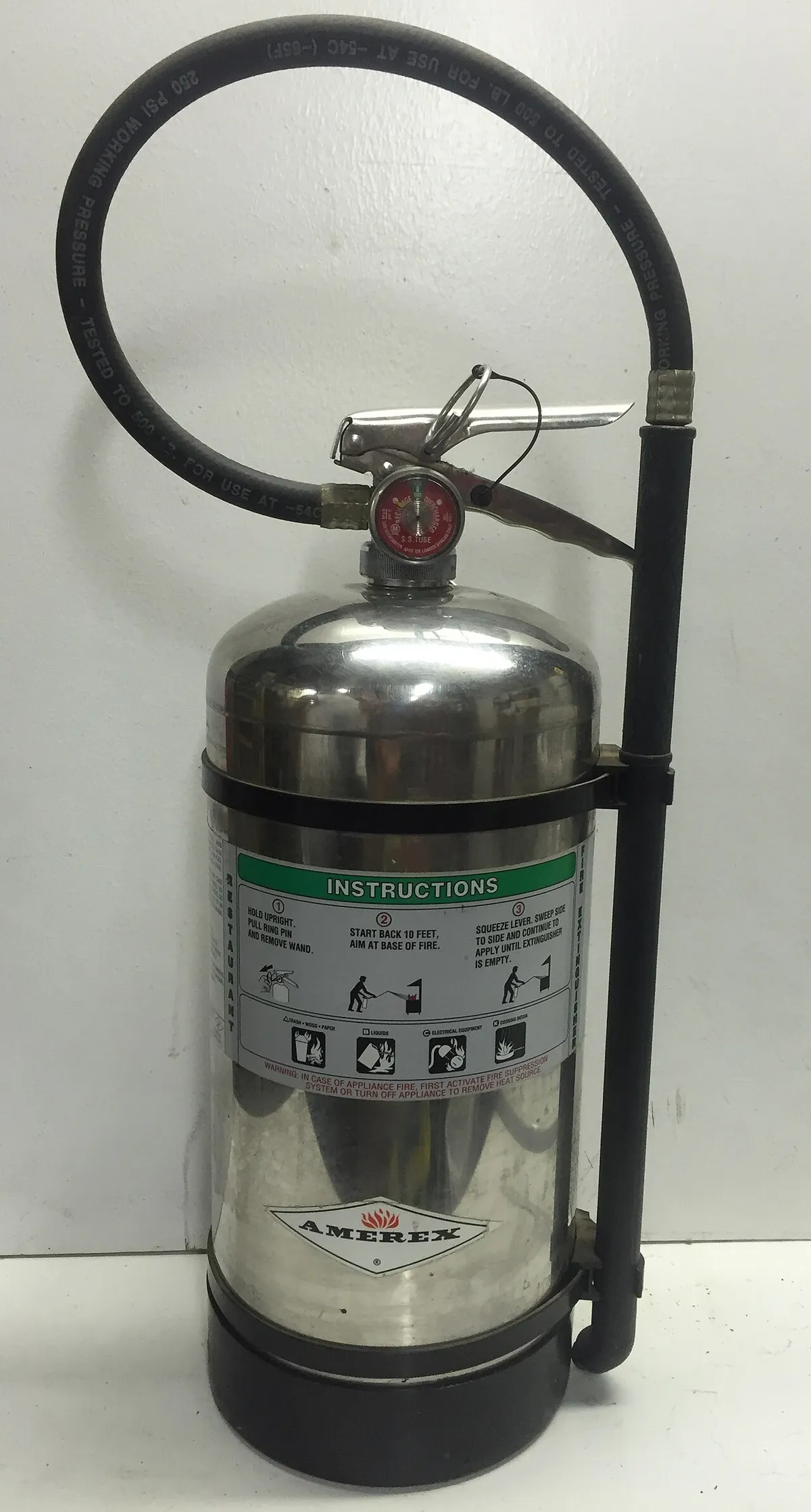
Suppression coverage moves too. Wet chemical nozzles are placed against a specific appliance line-up, and relocating a fryer or swapping a range for a charbroiler can put a hazard outside the coverage it was designed for. If you are changing the cook line at all, tell your suppression contractor and your cleaning contractor before the equipment arrives rather than after.
The Most Common Findings on Huntsville Kitchens
These six account for the large majority of exhaust-related findings on commercial kitchens in Huntsville and Madison County. None of them are hard to fix. All of them are cheaper to fix before an inspector writes them than after.
Permit Requirements FAQ
Do restaurants in Huntsville need a permit for hood cleaning?
Hood cleaning itself does not require a separate permit in Huntsville. However, your restaurant's food service establishment permit from the Alabama Department of Public Health (ADPH) requires that your exhaust ventilation system be maintained in compliance with applicable codes, including NFPA 96. A failing hood cleaning record can result in a ADPH food service permit violation at inspection.
What Alabama code governs restaurant kitchen ventilation permits?
Alabama Administrative Code Chapter 420-3-22 (Food Service Establishments) governs food establishment permitting and includes requirements for kitchen ventilation system maintenance. NFPA 96 is the referenced standard for commercial cooking exhaust system compliance. Both Huntsville Fire and Rescue and ADPH inspectors reference these standards when evaluating your exhaust system.
How does a hood cleaning certificate relate to my Alabama food service permit?
Your ADPH food service permit is renewed based on compliance with Chapter 420-3-22, which includes proper ventilation maintenance. NFPA 96-compliant hood cleaning documentation (cleaning certificate on the hood, written service report on file) is the evidence an ADPH inspector uses to verify compliance. Without current documentation, an inspector may issue a violation that can delay permit renewal.
Do I need a permit to install a new hood in a Huntsville restaurant?
Yes. Installing or replacing a Type I commercial kitchen hood is mechanical work that requires a permit and plan review through City of Huntsville Development Services before the equipment goes in, and the installation is inspected before you receive a Certificate of Occupancy. Separately, the Madison County Health Department requires food establishment plans to be submitted and approved before construction or extensive remodeling begins under Chapter 420-3-22. Cleaning an existing hood requires no permit at all. Installing one does.

Is the permit process different in Madison, Meridianville, or unincorporated Madison County?
It is. The City of Madison runs its own building department and issues its own mechanical permits and Certificates of Occupancy, so a kitchen at Town Madison does not go through Huntsville Development Services. In the unincorporated county pockets around Meridianville, Hazel Green, Toney, and Harvest, there is no equivalent city building department, and fire plan review and inspection generally route through the Alabama State Fire Marshal's office. The health side does not change anywhere in the county: the Madison County Health Department handles food establishment permitting under ADPH rules county wide.
Can adding a charbroiler or a wood-fired oven change my permit obligations?
Yes, in two ways. It changes your NFPA 96 Table 12.4 cleaning interval, usually moving a semiannual kitchen to quarterly or, for solid fuel, monthly. It can also change the physical system requirements. NFPA 96 Chapter 14 covers solid fuel cooking operations and imposes additional requirements, including separate exhaust for larger fireboxes and spark arrest provisions. Equipment changes that alter the exhaust or suppression design are plan review work, not a swap you make over a weekend.
What happens to my permit if a hood cleaning violation is written?
A hood cleaning finding does not suspend your food service permit on its own in ordinary circumstances. It becomes a correctable violation with a compliance date, and the risk is what happens if it is not corrected. Repeat or uncorrected findings escalate, and an exhaust system judged to be an imminent fire hazard can get a kitchen closed until it is cleaned. The realistic cost for most Huntsville operators is a re-inspection, a scramble to get a cleaner out on short notice at premium rates, and a documented history that an insurance carrier can read later.
Does the fire suppression system need its own permit and service record?
The installation of a wet chemical suppression system over a Type I hood is permitted and inspected work, and NFPA 96 requires the system to be inspected and serviced at least every six months thereafter, including fusible link replacement. That service is performed by a separately licensed suppression contractor, not by a hood cleaning crew. Both the suppression tag and the hood cleaning certificate are in plain view of an inspector standing at your cook line, and a current certificate on one does not cover an expired tag on the other.
Get Inspection-Ready Documentation
Ask for NFPA 96-compliant cleaning certificates and written service reports that Huntsville Fire and Rescue and ADPH will accept. Free quotes for Huntsville, Madison, Athens, and surrounding areas.